


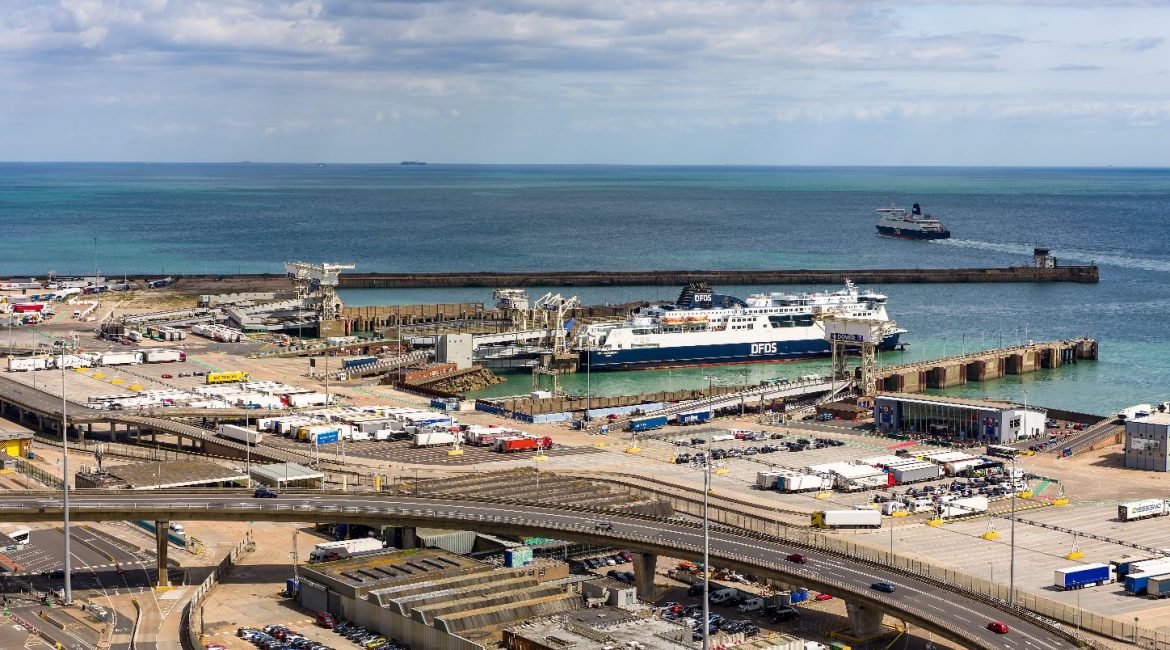
The Port of Dover has become the first UK port to achieve net-zero carbon emissions for Scope 1 and 2, reaching its target 25 years ahead of the UK government’s maritime decarbonisation goal.
The port has reduced emissions by 98.3% since 2007, with remaining emissions offset through a local regenerative farming scheme accredited under the UK Carbon Code of Conduct. The milestone follows external verification of the port’s 2025 emissions in line with ISO 14064 and GHG Protocol standards.
As the UK’s busiest international ferry port and a vital gateway for the movement of people and trade, Dover handles £144bn of trade per year, including around a third of UK goods trade with the EU.
Doug Bannister, CEO of the Port of Dover, said: “We are proud to be celebrating this milestone moment, which has seen our carbon emissions reduce drastically from nearly 14,000 tonnes 18 years ago.”
The port’s decarbonisation programme has included the adoption of hydrotreated vegetable oil (HVO) to power equipment, the installation of 1.5MW of on-site solar generation, and wider energy efficiency measures such as LED lighting and the purchase of renewable electricity.
The achievement forms part of the Port of Dover’s long-term 2050 Masterplan, which includes ambitions to develop a high-volume green shipping corridor on the Short Straits.
The UK Government reiterated its support for maritime decarbonisation. Aviation, maritime and decarbonisation minister, Keir Mather, commented: “It’s fantastic to see the Port of Dover charting the course for a cleaner maritime future, showing net zero port operations are becoming a reality in Britain.”